All movement standards

The rulebook's supporting cast

Standards Reference

The positions, body parts, definitions, rules and variations that movement standards are written in terms of.

Where a rep starts and ends

Positions

Browse Positions as their own page →

POSITION

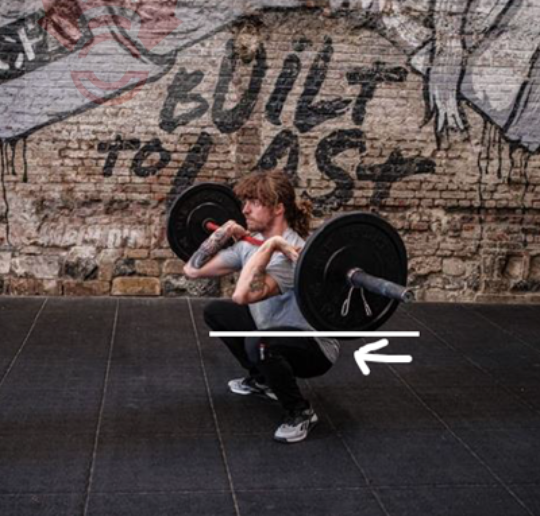
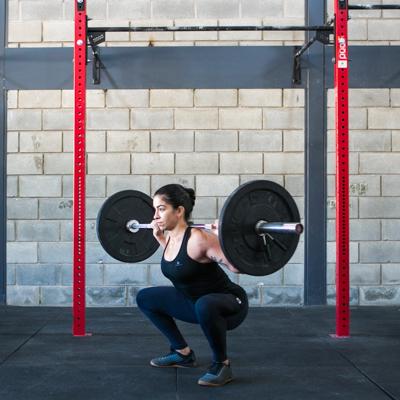
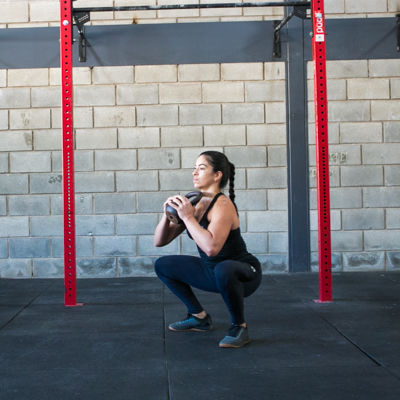
BOTTOM OF SQUAT

Standing free (2-foot version) or 1 foot on the ground.

  • Achieving a full squat, with the crease of the hip below the plane of the top of the knee for each active leg.
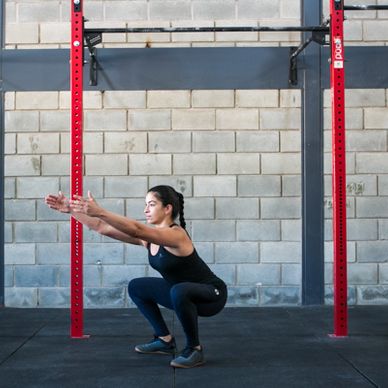
AIR-SQUAT_side_bottom_002.jpgimage.pngFRONT-SQUAT_three-quarter_bottom_021.jpgIMG_7517.jpg
POSITION

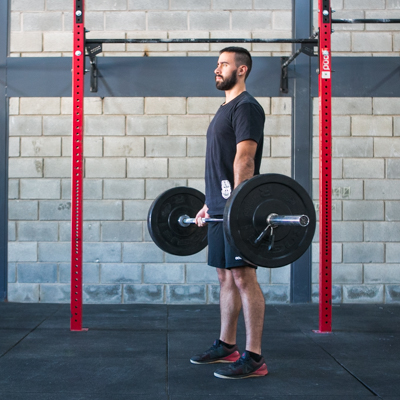
DEADLIFT LOCKOUT

Standing tall position is achieved.

  • Object is supported by the hands, arms oriented downward from the shoulders.
  • Elbows fully extended.
  • Shoulders behind the vertical plane of the object if object is kept in front of body.
DEADLIFT_side_lockout_051.jpg
POSITION

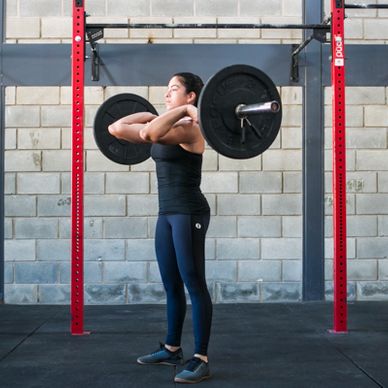
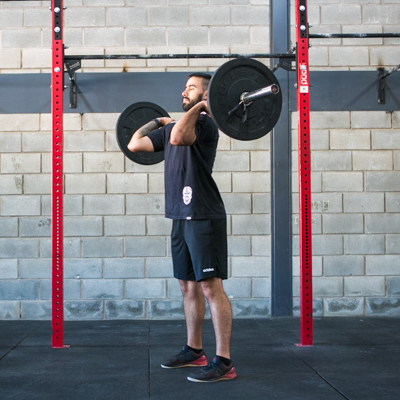
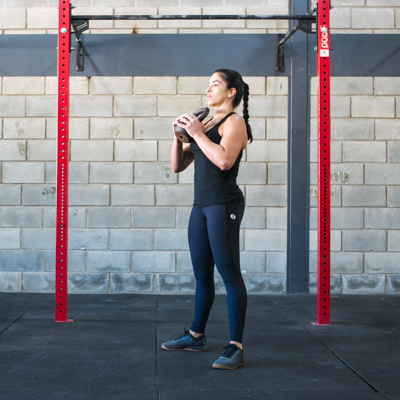
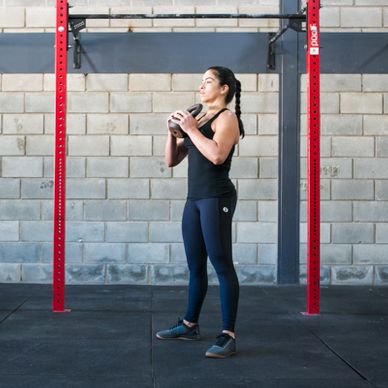
FRONT RACK LOCKOUT

Standing tall position is achieved.

  • Object in contact with the athlete’s shoulder(s).
  • Elbow(s) clearly in front of the center of mass of the object.
  • Fist(s) below chin.
FRONT-SQUAT_side_setup_004.jpg
POSITION

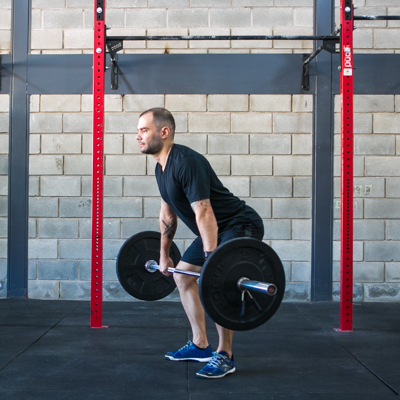
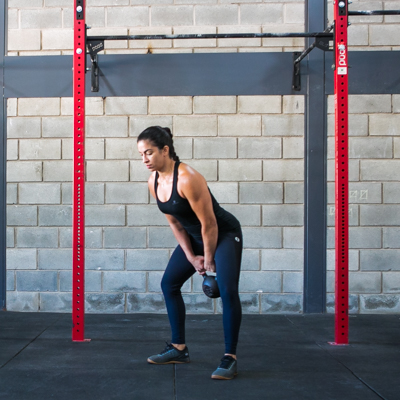
HANG POSITION

Standing free.

  • Object off ground (not touching ground with any part of the object).
  • Object is supported by the hands, arms oriented downward from the shoulders.
  • Elbows extended.
  • Shoulders in front of the vertical plane, placing object slightly lower than a deadlift lockout.
clean, barbell hang (bottom) (3).JPGAMERICAN-KETTLEBELL-SWING_three-quarter_setup_088.jpg
POSITION

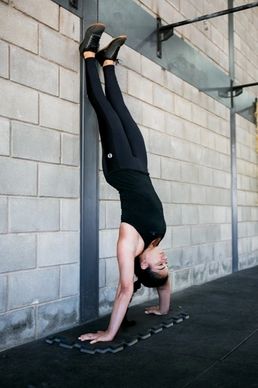
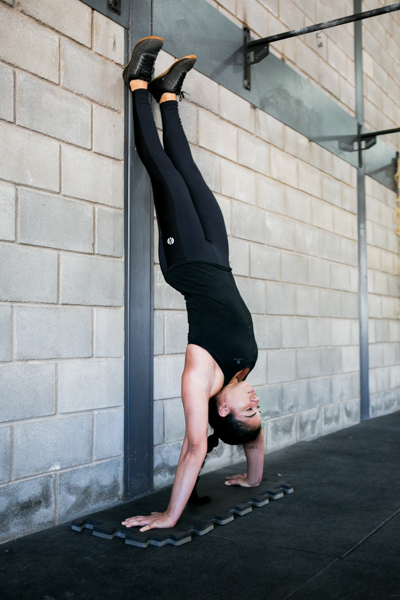
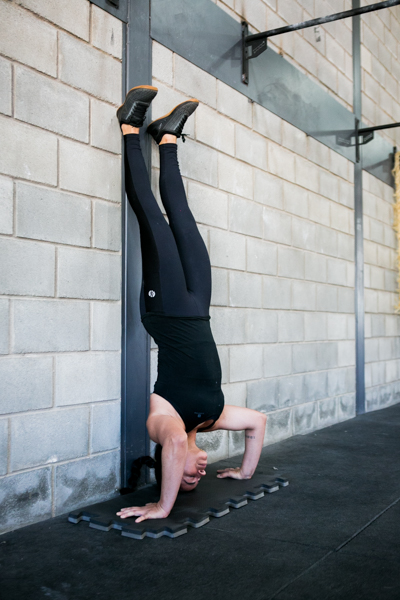
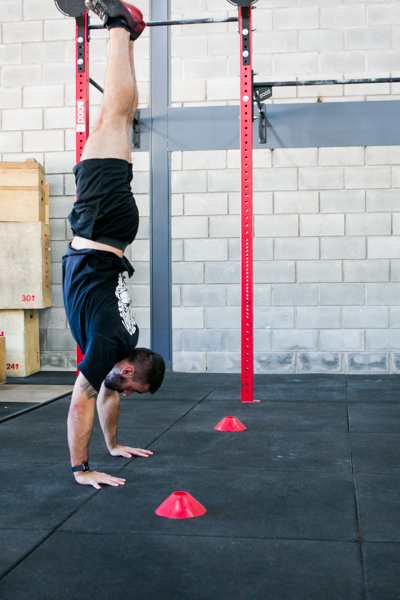
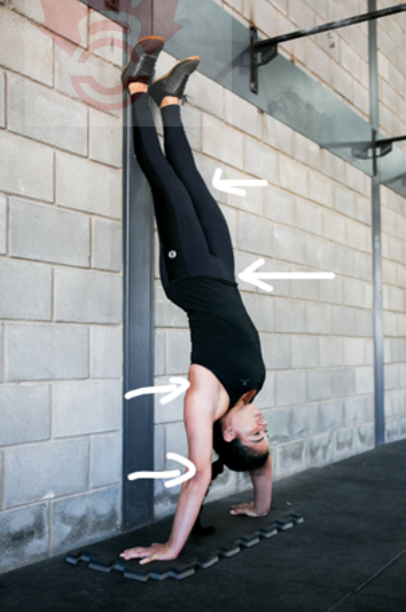
INVERTED LOCKOUT

  • Inverted (upside - down) position.
  • Only the ventral part of the hands in contact with the ground.
  • Full extension of the hips, knees and elbows.
POSITION

L POSITION

“L”-shape 90-degree with ground or starting object.

  • Forming an L-position horizontal legs, and heels at or above glutes.
POSITION

OBJECT ON GROUND

BARBELL

  • Both bumpers in contact with the ground at the same time.

DUMBBELL

  • Both sides/heads on a single dumbbell in contact with the ground at the same time.
  • When using two dumbbells, at least on side/head of each dumbbell need to make contact with the ground.

KETTLEBELL

  • Any part of the bottom circle of a kettlebell in contact with the ground.

BALL

  • Any part of the ball in contact with the ground.

ODD OBJECT

  • Any part of the object in contact with the ground.

WORM

  • Full worm in contact with the ground, or if held by hands, the hands are in contact with the ground.
POSITION

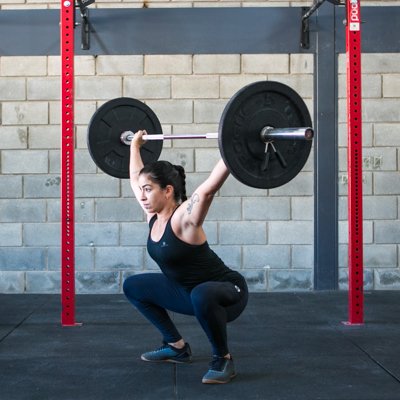
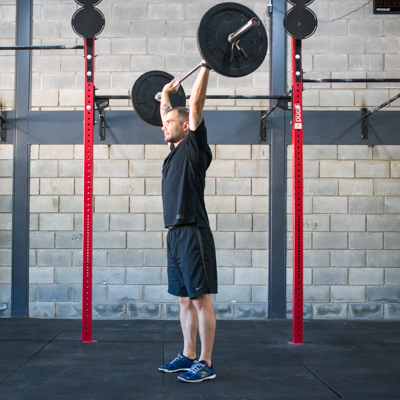
OVERHEAD LOCKOUT

  • Standing tall position is achieved
  • Object is overhead, arm(s) vertical.
  • Full extension of elbows.
  • For 1-arm versions, the supporting arm is vertical.
OVERHEAD-SQUAT_side_lockout_047.jpg
POSITION

PLANK LOCKOUT

Resting on the ventral part of the hands and toes.

  • No other body parts are in contact with the ground.
  • Arms and legs fully extended.
  • Shoulders, hips, and feet in alignment.
  • Toes no greater than shoulder width apart.
POSITION

POWER POSITION

Standing free

  • Avoiding bottom-of-squat, this includes:
  • a partial squat
  • a full extension (also known as "muscle position")
  • a split position
POSITION

PRONE

Generally flat on the ground, not arching.

  • Resting on the ventral part of the hands.
  • Hands positioned behind the line made by the chin.
  • Chest and toes in contact with the ground.
  • Leg, knee, face or any other body-part contact is permitted, but no required.
POSITION

SEATED

Gluteus in contact with ground or starting object.

POSITION

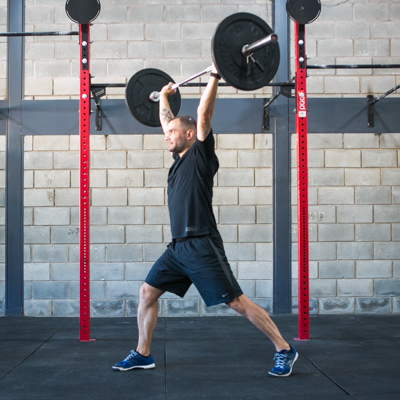
SPLIT

Standing free.

  • The entire front foot must be placed further in front than the toes of the back foot.
  • Both feet must move away from each other.
IMG_7574.JPG
POSITION

STANDING FREE

  • Both feet in contact with the ground or object.
RelatedKneesHip
AIR-SQUAT_three-quarter_setup_017.jpg
POSITION

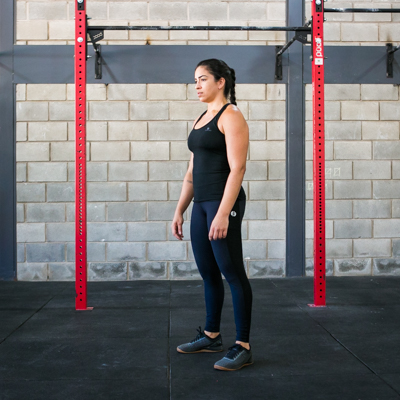
STANDING TALL

  • Standing free position is achieved
  • Full extension of the hips and knees
  • Chest up, straight back
  • Vertical alignment of the shoulders, hips, knees and ankles
AIR-SQUAT_three-quarter_setup_017.jpg
POSITION

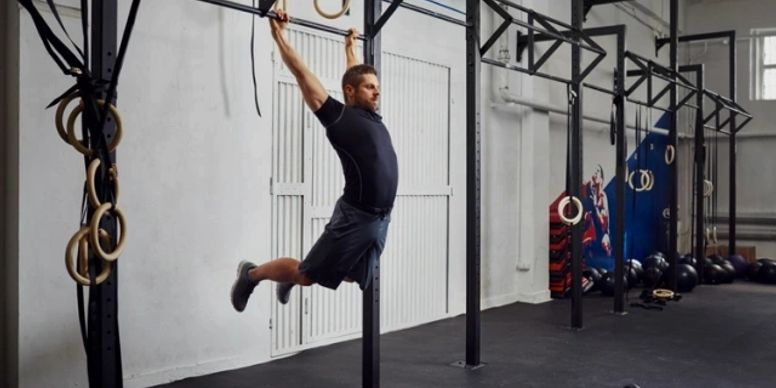
VERTICAL HANG

Hanging vertically from a suspended bar or rings using both hands.
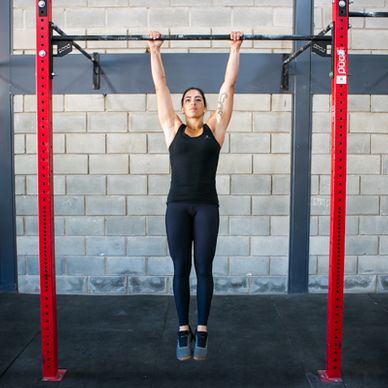
  • Full extension of elbows.
  • The shoulder angle is open or rearward if the frontal plane.
PULL-UP_front_setup_011.jpg
POSITION

VERTICAL SUPPORT

  • Fully supported on hands, shoulders above equipment (typically horizontal bar or rings).
  • Elbows fully extended.
  • Chest up, straight back.
  • Bodyweight is not supported with any body parts other than the hands (eg resting trunk on the bar)
The anatomy the standards measure

Body Parts

Browse Body Parts as their own page →

BODY PART

ABS

Area on torso including sternum and down to and including hip-bones.

BODY PART

BACK RACK

Area from neck and down to lower shoulder blades
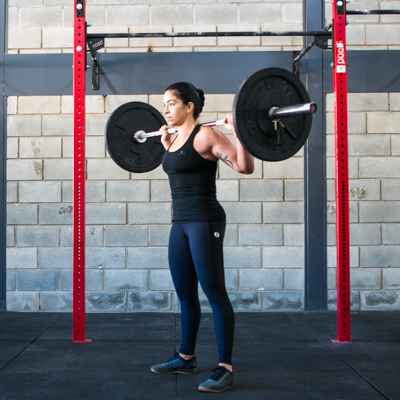
FRONT-SQUAT_three-quarter_setup_019.jpg
BODY PART

CHEST

Area on torso including the clavicle and down to and including upper abs.

BODY PART

COLLARBONE

  • The collarbone, or clavicle, refers to the slender bone spanning horizontally across the upper chest, extending from the sternum to the shoulder joint.
BODY PART

ELBOWS

The joint between the humerus (upper arm) and the radius and ulna (forearm).

BODY PART

FOOT

The terminal joint of the leg, below the ankle joint

BODY PART

FRONT RACK

Area including chest and shoulders

FRONT-SQUAT_side_setup_004.jpg
BODY PART

GLUTES

  • Area between hamstring and lower back.
BODY PART

HANDS

Positioning: Entire hand with full palm and all fingers

  • Gripping: Any part of the hand, full or partial
BODY PART

HIP

The joint between the femur and the hip bone

BODY PART

KNEES

The joint between the thighs and the lower leg.

BODY PART

LEG

Entire lower limb of the human body, including the foot, thigh and even the hips and gluteal region.
BODY PART

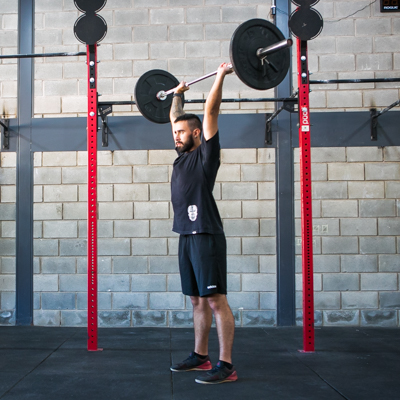
OVERHEAD

  • Area above the top of the head of the athlete. Can be slightly above, or way above
  • In front, directly over, or behind the center of head.
OVERHEAD-SQUAT_side_lockout_047.jpgSTRICT-PRESS_side_lockout_049.jpg
BODY PART

SHOULDERS

Area on torso including the actual shoulders and down to and including clavicle.

BODY PART

TOES

Area on the shoe also known as "toe box" - typically up until the laces start.

  • Includes top, bottom and any sides of the shoe in this area.
Applied across movements

Rules

Browse Rules as their own page →

RULE

ADHERE TO INTENT

While a movement’s definition is meant to be exact and complete, there might be cases where a literal interpretation of the written standard can be exploited to perform the movement in a way that was not intended. In such cases the Technical Official (TO) or Head Technical Official (HTO) will be able to no-rep such repetitions in real-time or after the test.

RULE

ALTERNATING RULE

An alternating execution of a task implies that the repetitions of the task must be completed by alternating left/right on the active hand or foot. After a good rep by the left side, a new repetition will not be counted on the left side before a good repetition has been performed on the right. If the athlete is not able to perform the movement on both sides, he or she will not be able to complete the task.

RULE

AVOID CONTACT

Unless specifically stated the athlete and/or object may not rest or come in contact with:

  • any surface (wall, ceiling, floor)
  • any equipment, bars, boxes, racks etc.
  • any object not being the active object during a repetition

The main exceptions not specified are shoes-to-floor on any ground movement and hands-to-rings/bar on any hanging movement as well as the active object’s resting position (on ground, in rack etc.).

RULE

HANG RULE

If an object is in contact with the ground, including before the initial rep, a deadlift lockout must be achieved before the rep can be initiated.

RULE

LINE POSITIONING

Whenever a standard requires the athlete to be in contact with the ground on one side of a line, this means that not only must the athlete be in contact with the ground as stated, but no other part of the athlete may be in contact with the actual line or the area on the other side of the line. Parts of the athlete may however be above the line or on the other side as long as this is in air, and not in contact. E.g. An athlete may jump over a finish line while having his hand in the air over the other side.

RULE

PASSIVE ARM

Whenever there are one or more passive arms, e.g. in single arm movements or leg-movements, the passive arm(s) cannot be used to push or pull off the athletes body or contact in any way unless specifically stated in the standard. The arm(s) can however be swung in the air to generate momentum or kept freely in the air.

RULE

UNBROKEN RULE

A set of repetitions must be performed without breaking, resting object on ground or resting outside of normal movement pattern. If rep start = rep end, then there are no “in between” reps and rep requirements would count for the whole set Some definitions in this regard:

  • Breaking equals letting go of external object or dismounting from bar/rings.
  • Resting on ground is anything more than touch-and-go fraction of a second.
  • Resting outside of normal movement pattern is going into a position that normally one would not and that is clearly done for the recovery purpose. E.g. putting the bar on the back of the neck (not front rack) during a set of thrusters.
RULE

VISIBILITY AT SPEED

Unless specifically stated in the standard, all rep start, rep end and other positions may be achieved in speed and with momentum. Still, it is the athlete's responsibility to perform the movement clearly for the TO.

RULE

WEIGHT VEST

If a weight vest is required for a task, it must be worn tight enough so that the vest can be pulled away no greater than two fingers depth from the chest. An athlete who chooses to adjust vest tightness while mid-task may be required to show the TO that the vest adjustment conforms to the above standard before continuing with further task work.

Load, range and execution

Variations

Browse Variations as their own page →

0.09

DEFICIT

Range Of Motion

Rep Requirement

  • Athlete (and not ground) is elevated by x cm

Equipment

  • Barbell (Deadlift)
  • Plates (Handstand push-ups)
  • Blocks (Handstand push-ups)

Applies To

Full entry →

0.10

ELEVATED

Range Of Motion

Rep Requirement

  • Athlete (and not ground) is elevated by x cm.

Equipment

  • Barbell (Deadlift)
  • Plates (Handstand push-ups)
  • Blocks (Handstand push-ups)

Applies To

Full entry →

0.12

STRICT

Execution

Knees, hips, trunk, shoulder and elbows must stay fully extended throughout full rep unless it is the active part of the movement.

Rep Start

  • Rep start cannot be achieved with any momentum, neither from previous rep or as a result of initial swing, kip or other movement.

Rep Requirement

  • Knees, hips, trunk, shoulder and elbows must stay fully extended throughout full rep unless it is the active part of the movement.
  • Any additional contraction, swing, kip, knee jerk or other movement to generate momentum is prohibited.
  • The hip angle must be 120 to 180 degrees (bar muscle-up, ring muscle-up).

Applies To

Full entry →

0.13

KIPPING

Execution

Note: Kipping is not a real variation as all movements are kipping by default. However, the word "kipping" can be used in test descriptions to differentiate between required "strict" repetitions of the same movement.

Applies To
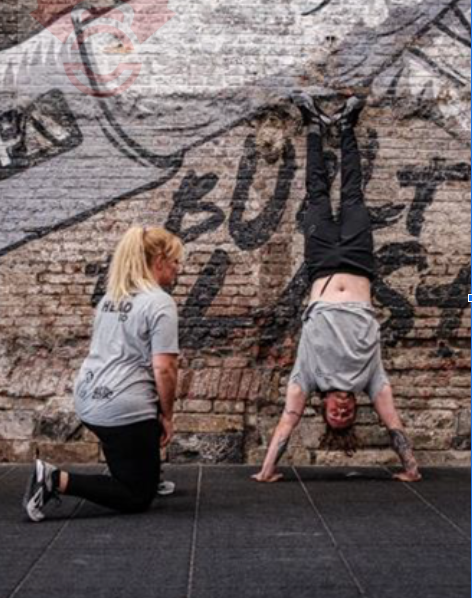
image.pngimage.pngKIPPING_side_midpoint_016.jpgHANDSTAND-PUSH-UP_side_bottom_013.jpgHANDSTAND-PUSH-UP_side_bottom_069.jpgHANDSTAND-PUSH-UP_side_bottom_070.jpgHANDSTAND-PUSH-UP_side_bottom_071.jpg

Full entry →

0.14

SPLIT

Execution

Rep Requirement

  • The entire front foot must be placed further in front than the toes of the back foot. Both feet must move away from each other.

Equipment

  • all

Applies To

Full entry →

0.15

WITHOUT MOVEMENT

Execution

Athlete maintains throughout the full repetition.

Rep Start

  • Inverted lockout

Rep End

  • Inverted lockout

Rep Requirement

  • Unbroken rules.
  • Athlete maintains throughout the full repetition.
  • Maintain full contact in position of the athlete’s rep start point.
  • Must remain within designated area throughout the full rep.
  • Maintain requirements until goal is met.

Applies To

Full entry →

0.17

NO JUMP

Execution

Note: Jumping is accepted by default. However, the words "no jump" or "no jumping" can be used in a test description to restrict a starting point of athlete's repetitions of the same movement.

Applies To
Full entry →

0.18

LEGLESS

Execution

May not use feet, thighs or any part of the body other than hands to support the body (and/or load) or assist in any way.

Rep Requirement

  • May not use feet, thighs or any part of the body other than hands to support the body (and/or load) or assist in any way.
  • This can be applied to ascending or descending during a rep or both.

Applies To

Full entry →

0.20

L-SIT

Load Position

Athlete has all body weight on hands while torso held in a forward-leaning orientation, with legs held horizontally creating an "L" shape.

Rep Start

  • Athlete supported on hands.
  • Hip bent, forming an L-shape.

Rep End

  • Athlete supported on hands.
  • Hip bent, forming an L-shape.

Rep Requirement

  • Legs must remain over vertical target.
  • Feet must remain beyond horizontal target.

Cycle & Post Rep

  • Continuous segments: rep end is a valid rep start.
  • Otherwise: the athlete may return to rep start in any controlled manner.

Measurements

  • Vertical target: standard same as top of parallettes.
  • Horizontal target: at athlete ankle when legs are fully extended.

Equipment

  • Parallettes.

Full entry →

0.21

L-HANG

Load Position

Athlete hanging from object with legs held horizontally creating an "L" shape.

Rep Start

  • Athlete hanging from hands.
  • Hip bent, forming an L-shape.

Rep End

  • Athlete hanging from hands.
  • Hip bent, forming an L-shape.

Rep Requirement

  • Legs must remain over vertical target.
  • Feet must remain beyond horizontal target.

Cycle & Post Rep

  • Continuous segments: rep end is a valid rep start.
  • Otherwise: the athlete may return to rep start in any controlled manner.

Measurements

  • Vertical target: standard set so athletes legs must be held at a 90 degree angle with the body.
  • Horizontal target: at athlete ankle when legs are fully extended.

Equipment

  • Horizontal bar.
  • Rings.

Applies To

Full entry →

0.23

STEP DOWN

Jumping

When stepping down from the box, any part of one foot must remain in contact with the top of the box until the other foot reaches the ground. The foot on the box may only be removed and lowered to the ground once the opposing foot has made contact with the ground.

Applies To

Full entry →